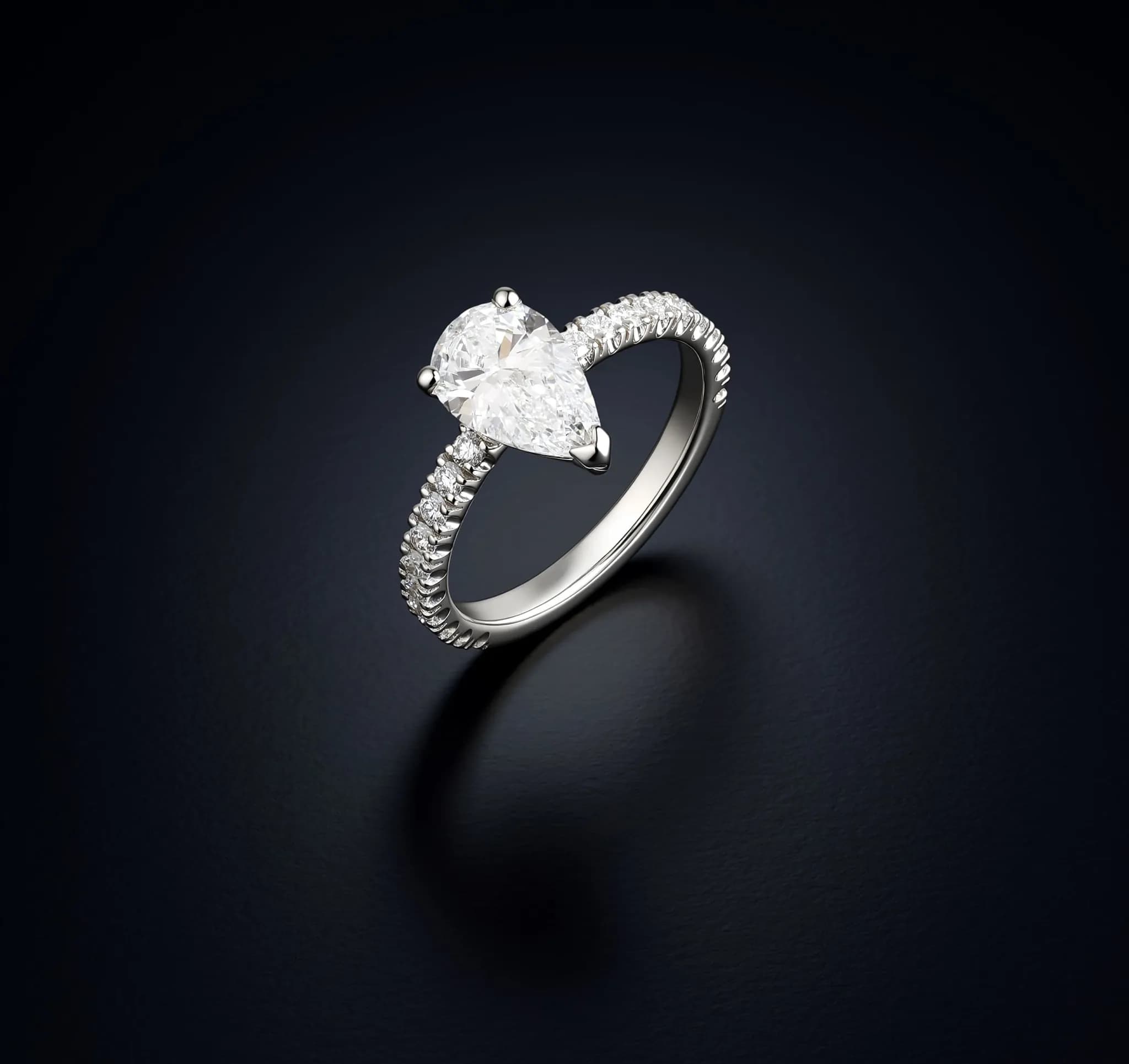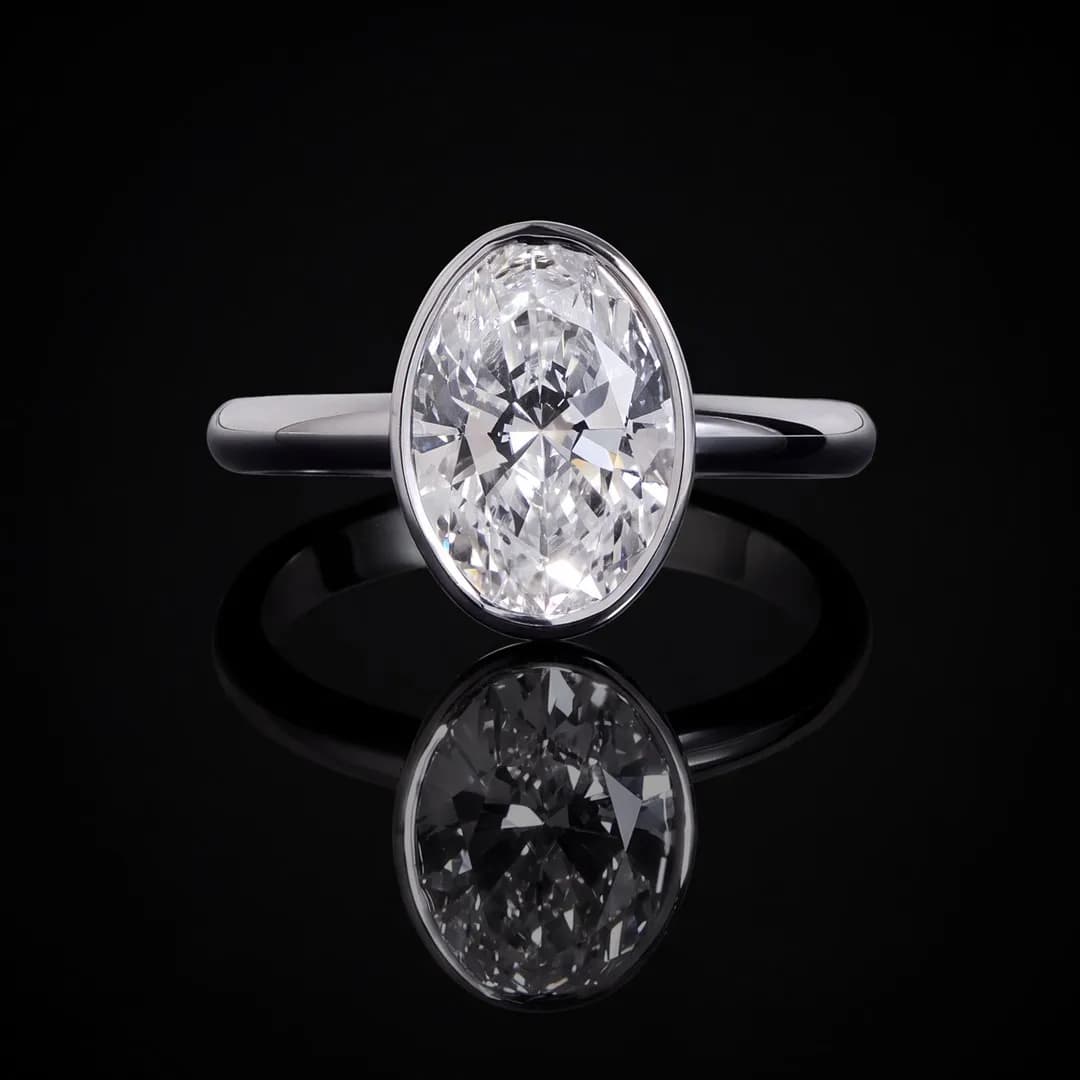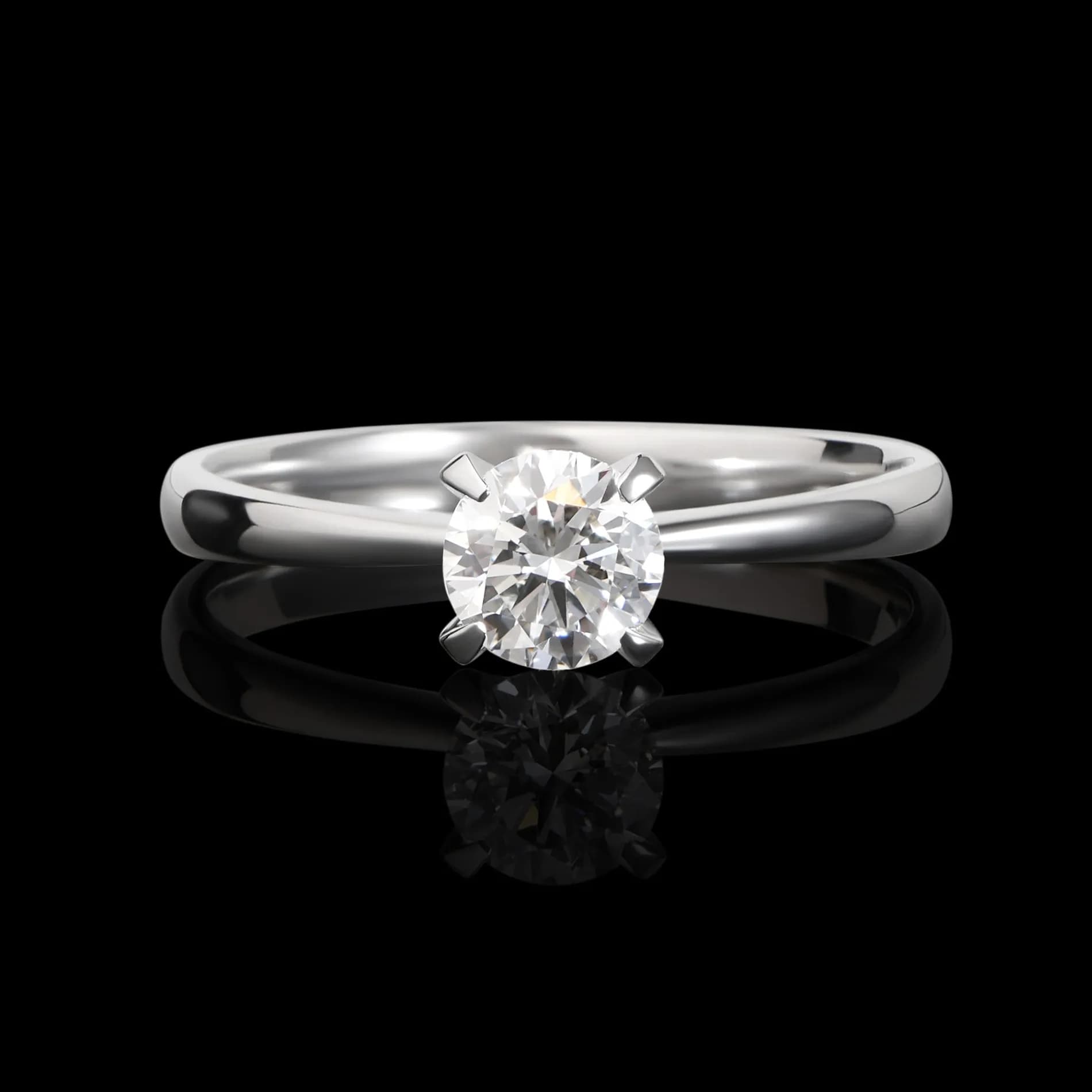
Каблучка з лабораторним діамантом з білого золота 213-0286 0,50 GIA (16.5)
56 863 UAH48 335 UAH
The modern jewelry world is undergoing a transformation in which cutting-edge technology meets the art of fine jewelry. A striking example is jewelry with lab-grown diamonds, which have the same chemical composition, physical properties, and optical characteristics as natural stones.
Together with the Denarius jewelry brand, we invite you to see luxury through the lens of innovation and a modern approach to choosing fine jewelry. Our catalog features lab-grown diamond rings in a variety of designs, among which you are sure to find a piece that highlights your individuality or becomes a symbol of a special occasion.
The Denarius jewelry company offers lab-grown diamond rings in a variety of cuts:
Our collection also includes various setting designs for lab-grown diamonds. These include classic solitaires, which are among the most popular engagement rings, elegant halo designs, luxurious pavé rings, and other styles. If you are looking for something truly one of a kind, the Denarius jewelry brand is ready to bring your idea to life. We create custom lab-grown diamond rings based on a description, photograph, or sketch.
In terms of chemical, physical, and optical properties, lab-grown and natural diamonds are completely identical. They have the same crystal structure, the same refractive index, and the maximum hardness on the Mohs scale (10). They can only be distinguished in a specialized gemological laboratory using equipment that identifies the crystal growth structure.
However, there are still several differences between lab-grown and natural diamonds, including:
Unlike a lab-grown diamond, simulants such as cubic zirconia and moissanite have a completely different chemical composition and physical properties. They only resemble diamonds visually but differ significantly in hardness, resistance to mechanical damage, optical dispersion, and other characteristics.
The quality of a lab-grown diamond is assessed using the 4C system, which is also used for diamond rings with natural diamonds. During evaluation, four criteria are analyzed:
Every high-quality lab-grown diamond comes with a gemological certificate from a leading international laboratory, such as IGI or GIA. This document lists all the characteristics of the stone and includes an official indication of its origin (Laboratory-Grown or Lab-Grown).
When choosing a lab-grown diamond ring, the first thing to decide on is its design. There is no universal solution here, as some people prefer refined classics, such as a solitaire with a slim band and a single statement stone, while others are drawn to bold jewelry with complex shapes and unusual geometry.
Next, choose the color of the precious metal alloy. Consider which jewelry pieces dominate your collection and what effect you want to achieve. White gold visually blends with the facets of the stone, making it appear larger and more expressive. Yellow gold creates a warm, noble contrast with the crystal’s pure brilliance. Red gold adds romance, elegance, and vintage charm to the piece. If you find it difficult to choose a gold color, there is no need to compromise, as some designs combine several shades of gold.
After that, you can move on to choosing the carat weight, clarity, cut, and color of the lab-grown diamond according to the 4C system. The balance of these parameters depends on your budget, but jewelers recommend following one important rule. It is better to choose a ring with a slightly smaller lab-grown diamond that has higher clarity and an excellent cut than the other way around.
To buy a lab-grown diamond ring from Denarius, simply follow a few steps:
After that, our manager will contact you to confirm the order and make sure your lab-grown diamond ring is delivered to the specified address as quickly as possible.